
Christmas and Audiovisual Storytelling: What Makes a Story Stand the Test of Time
22.12.2025
Christmas always makes me think about stories. Not only the ones we watch or remember, but those that continue to exist even when everything around them changes.
The date passes, the years go by, people grow older, yet something always remains. And that doesn’t happen by chance.
When we look more closely, we realize that Christmas was never just a celebration on the calendar. It has always been a meeting point between memory, meaning, and repetition. A story that crossed centuries because it found ways to be remembered, interpreted, and passed on—long before cinema, video, or any kind of technical record existed, even though there were writings, accounts, and the testimony of an era.
Perhaps that is why the connection between Christmas and audiovisual storytelling is so interesting.
It reveals something essential about how humanity deals with time, and at the same time exposes a very current dilemma faced by brands, companies, and content creators today.
Stories are not born from technology.
They are born from meaning.
Cinema is often seen as the great guardian of stories, but it was never the starting point. Before the camera, there was already narrative. The event itself existed before the frame.
Audiovisual entered the scene when human beings felt the need to protect certain stories from the erosion of time.
Christmas classics don’t survive because they were well produced, but because they touched something that remains recognizable in any era.
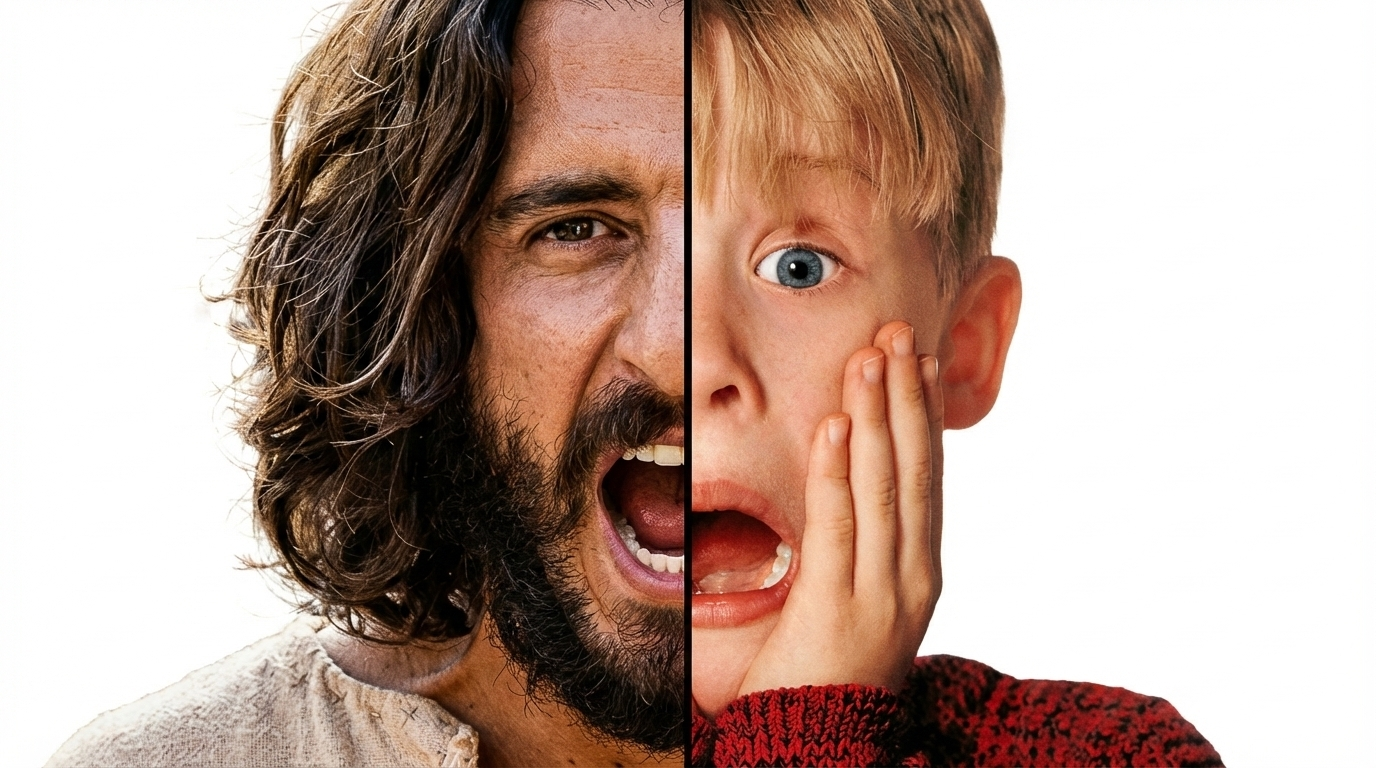
This year, I was able to watch some Christmas classics with my children—of all kinds. From the most fantastical, like The Grinch, to the playful world of 3D animation such as The Star, which tells the most important story of all: the birth of Jesus. And of course, the unforgettable Home Alone, in all its variations.
Year after year, these stories return, and no one is bothered by watching them again. Quite the opposite. They function as a silent ritual of emotional alignment, almost like a reminder of who we are and what we value.
This says a lot about the real role of audiovisual media.
It does not create relevance.
It preserves what is already relevant.
When this logic is ignored, recording becomes excessive. And in that case, instead of memory, it turns into noise.
The modern mistake of recording everything and remembering little
Today, recording is easy. The hard part is choosing what deserves to continue existing. Companies produce videos all the time, but few stop to consider whether they are building any kind of legacy or simply filling space.
There is a huge difference between accumulating files and building memory. Memory requires intention. It asks for narrative. It demands decision-making. Without that, material gets lost in its own volume.
In my work with documentary audiovisual, this is one of the most important conversations. Producing is not about appearing.
It is about taking responsibility for what is being said, shown, and—most importantly—what will remain when the context changes.
Cinema and time: a mature relationship
Christmas films that cross generations don’t try to compete with the present. They don’t adapt themselves to momentary trends. They accept their own aging, and curiously, that is what keeps them alive.
There is something very mature in this posture. When a story understands who it is, it doesn’t need to chase relevance. It simply remains available for those who wish to find it.
Brands and companies could learn a lot from this. The obsessive search for novelty often generates content that ages quickly. Clarity of essence, on the other hand, allows communication to mature alongside its audience.
Recording is an act of care, not vanity
There is a mistaken belief that recording stories is an exercise in ego. In practice, it is the opposite. Recording is caring. It is recognizing that certain experiences, processes, and people were part of something greater and should not disappear without leaving traces.
When someone chooses not to record an important story, they give up on transmitting it. And every story that is not transmitted gradually dissolves.
This awareness completely changes how we look at audiovisual media. It stops being a promotional tool and becomes an instrument of preservation.
The greatest paradox of Christmas
Perhaps the most powerful point of this entire reflection lies precisely in the central paradox of Christmas. The story that gives rise to all of this had no technical record at all. There was no camera, no image, no film. Only writings, lived experiences, and testimonies that endured.
Even so, it crossed centuries, transformed cultures, and influenced how the world organizes itself. This happened because the strength of the narrative came before any medium. The truth of the story sustained its transmission.
This is an important reminder for anyone working with communication today. Audiovisual does not create truth.
It amplifies what is already true.
Without essence, no technique holds up.
With essence, technique becomes a bridge.
What all of this teaches us
Christmas shows that some stories exist regardless of being recorded. But it also teaches us that when a story is true and meaningful, recording it is an act of generosity toward those who come after.
My work has never been about making videos. It has always been about choosing which stories deserve to continue being told when the people who lived them are no longer here.
At its core, this is what connects Christmas, memory, and audiovisual storytelling: the conscious decision not to let certain stories disappear. And perhaps this is one of the greatest acts of responsibility that a brand, a company, or a person can take on.
I want to use this closing to genuinely thank everyone who walked alongside me here throughout this year—those who read, replied, shared, disagreed, and reflected together. Writing this newsletter only makes sense because there is someone on the other side willing to stop, read, and think. That is rare today. And that is why it is valuable.
May this Christmas be lived with more presence than haste, with more meaning than excess, and with more memory than distraction. May we not lose sight of what lies at the origin of all of this: the birth of Jesus, whom the Christian tradition recognizes as the King of Kings—not as an abstract symbol, but as a real event that crossed time and shaped values, cultures, and ways of living. This is what I believe.
As the prophet Isaiah says:
“For to us a child is born, to us a son is given; and the government shall be upon his shoulders.”
May this truth find space not only in words, but in each person’s life—in homes, relationships, and daily choices.
May Christmas, above all, be a reunion with what truly matters. For you, for your family, and for everything you are building.
EVERY SECOND MATTERS.
With hot coffee and a present mind,
Merry Christmas.
Renan.