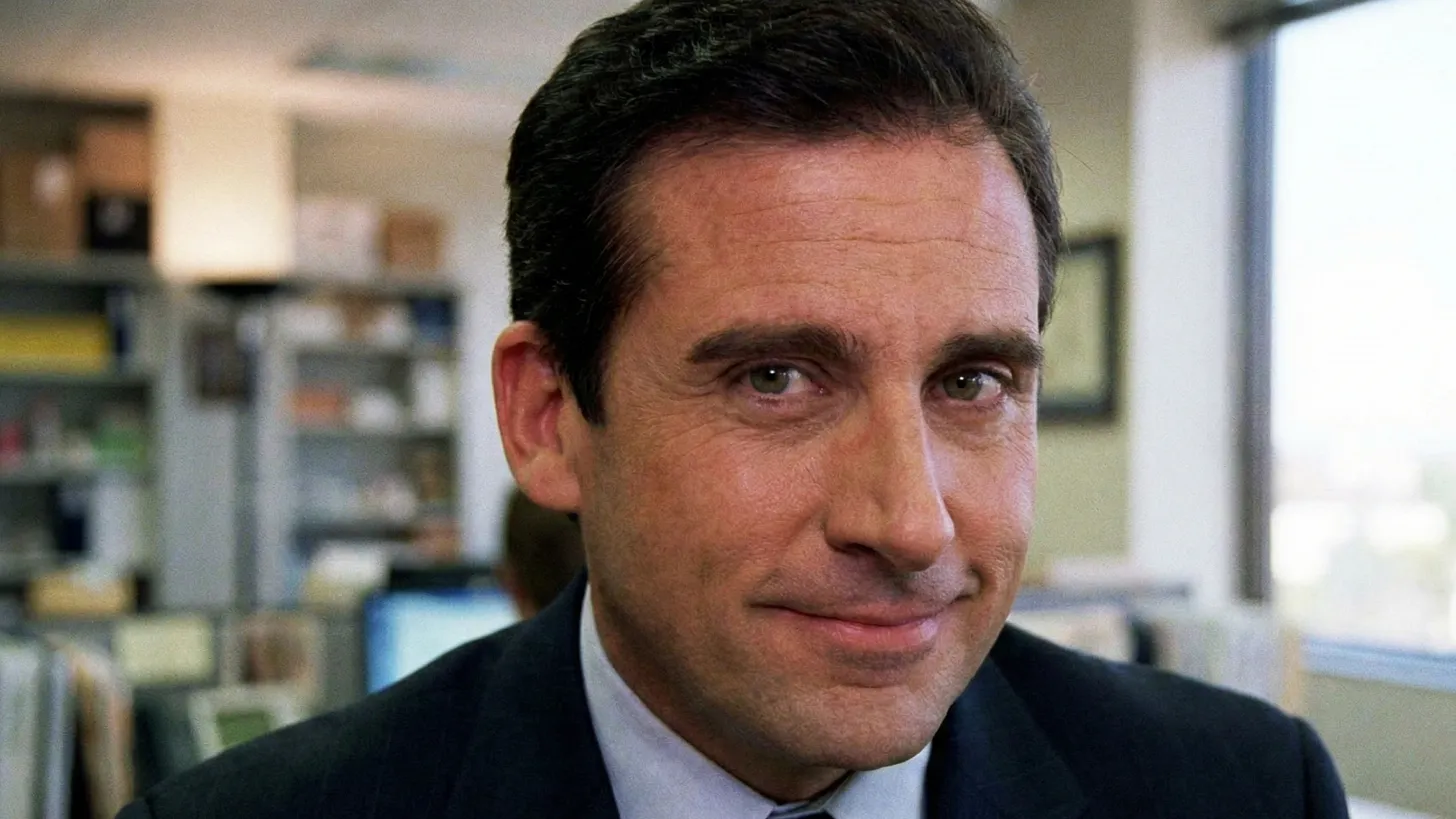
Customers prefer brands that look at them, not at the mirror.
24.11.2025
I’ll start with a very common scene these days—one you’re probably used to dealing with in everyday life: the annoying person who only talks about themselves.
The way the world works has led us here. I’m not entirely sure whether it’s their fault or not.
And I say they because, beyond people, there are now brands and businesses heading down this same path.
You try to say something, to interact, but they don’t listen.
How long can you stand staying there?
Probably not very long.
And if you do stay, it’s purely out of politeness.
Congratulations to you.
Now imagine a different situation.
This other person asks how you’re doing and looks you in the eye.
They pay attention to you, notice when you smile or when something makes you uncomfortable.
Which of these two people would you like to meet again?
Brands are like people.
And I’d say customers feel the same things.
In truth, it’s all very simple.
Customers prefer brands that look at them, not at the mirror.
It’s like a window versus a mirror.
The mirror only shows whoever is looking at it.
The window shows the world outside.
Brands that behave like mirrors only show themselves.
Brands that behave like windows show what they can do for people’s lives.
Brands and people work the same way.
Life only works when there’s some kind of exchange.
Some form of identification.
A one-sided relationship creates no bond.
And with brands, it’s the same.
Customers prefer brands that look at them.
In fact, those that show even a minimum level of interest.
Not the ones that keep saying all the time, “Look how great I am…”
That’s the thesis.
Simple. Direct. Uncontestable.
And yet, a large number of brands insist on staring at the mirror while the customer is trying to look through the window.
Because companies and brands also have “roles,” phases, and histories.
I even mentioned some of my roles in the previous newsletter, and they complement each other and shape who I am today.
And, like me, many don’t record all of this.
They don’t preserve memory.
They don’t tell their journeys.
They don’t show customers how they evolved, what they learned, how they transformed someone’s life.
And when there’s no story, there’s no connection.
Sharing
Brands disappear from people’s minds because of this.
My son is very artistic (like me) and is in a phase of drawing by hand.
We’ve encouraged this a lot, and he’s shown incredible progress every day.
If I ask him to draw a house…
He won’t draw the most beautiful house in the world.
He’ll draw the house as he sees it.
Now apply this example to a company trying to show a “perfect drawing,” a polished institutional video full of empty phrases, everything overly refined.
You know what happens.
The customer looks at it and thinks, “This has nothing to do with my life.”
And interest dies right there.
Why no one remembers institutional videos
Because they were made with the wrong intention:
Talking about the company, not the customer.
And it’s not that they’re bad…
It’s that they’re irrelevant the way they’re made—and for today’s dynamics.
Imagine a restaurant that makes an institutional video saying:
“Our processes are flawless, we use selected ingredients, we are a benchmark in the sector.”
Now imagine another video, but with a real customer saying:
“I’ve always wanted to bring my grandmother here, because it’s the only place where she remembers the food she used to cook when I was a child.”
That’s the difference.
One talks about itself.
The other shows real impact.
The first is beautiful.
The second is memorable.
The silent pains of managers
I talk to many managers every month. Some are clients, others are friends. And when we remove the weight of formality from conversations about their businesses, almost all of them admit the same thing:
“Renan, we produce too much content and too little meaning.”
They live under absurd pressure to deliver; empty campaigns that repeat themselves; content no one remembers the next day; competitors saying the same things; similar aesthetics; and the same old background noise on top of more noise.
And when I ask:
“Have you been documenting the real impact your brand has on people’s lives?”
The answer is almost always:
“…not yet.”
And that borders on unacceptable. It makes no sense in my head.
Out of all the metrics they live by, they leave aside the most important one.
Because it’s like having a beautiful story and never telling it to anyone.
If they looked more calmly
“But what if the customer doesn’t want to appear?”
A story doesn’t depend on a face.
It depends on truth, on curation.
You can show impact through voice, context, routine, behind-the-scenes, atmosphere, narrative.
“Documentary is too slow.”
Slow is trying to gain relevance by posting 20 pieces of content a month that no one remembers.
Documentary is built to last years, not days. I’ve said this here before.
“Doesn’t talking about the customer weaken the brand?”
Quite the opposite. The brand becomes the guide of the journey—and a guide is always more valuable than the protagonist.
If I had to explain it to you:
“Man, we help brands see people.
And then we show that on video.”
That simple.
1. First, we truly listen
Listening is rarer than people think.
Most brands talk too much and understand too little.
Businesses that are riding the leading edge today have already understood this.
And we remove all the excess until we reach the core:
the real impact on people’s lives.
2. Then we build a customer-centered narrative
The story doesn’t start with the company. That’s where many go wrong.
It starts with:
the customer’s life;
their fears;
their achievements;
their dreams;
what changes when the brand enters the story.
The brand is not the star.
It’s the turning point that creates meaning and purpose.
3. Aesthetics, rhythm, atmosphere—all aligned with meaning
Aesthetics is not decoration.
It’s direction. And good direction sparks emotion. And emotion becomes memory.
4. This becomes an asset
A real asset. Like a photo album, a memory box, a record that shows the brand’s evolution.
It’s everything classic institutional content fails to deliver.
What does this change at the end of your day?
I’ll answer with a simple question:
If tomorrow your brand disappeared…
who would miss it?
The honest answer is never in trophies, a new headquarters, or a pretty video.
It’s in the bond.
In the relationship.
In the shared story.
And that story only exists when you make the smartest (and most human) choice a brand can make:
looking at people before looking at itself.
The simple truth
Brands that only talk about themselves are forgotten.
Brands that talk about the customer are remembered.
But brands that show the impact they have on people’s lives…
Those are loved.
This is what I’ve been dedicated to for 15 years, together with the production company.
That’s why our work generates so much value.
And that’s why, if you want to build a meaningful story—not just campaigns—you need to look at your customer the way you look through a window.
And I’ll leave you with this:
Stop talking about yourself and start showing what you do in the lives of those who matter.
And for that, you already know how I can guide you—not only on the “how,” but also on the “for whom.”
A coffee warm, and a present mind.
Renan.
Outros posts
-
Christmas and Audiovisual Storytelling: What Makes a Story Stand the Test of Time
![Christmas and Audiovisual Storytelling: What Makes a Story Stand the Test of Time]()

-
Fine Dining and the “Injection Generation” What’s left when pleasure becomes just a calorie?
![Fine Dining and the “Injection Generation” What’s left when pleasure becomes just a calorie?]()

-
What’s really worth it in audiovisual? Beyond the play button: Peeling back the layers of real value in audiovisual
![What’s really worth it in audiovisual? Beyond the play button: Peeling back the layers of real value in audiovisual]()

-
Six months have already gone by since I started writing.
![Six months have already gone by since I started writing.]()